Red Dot Marina Bay Art and Design Guide

Marina Bay is one of the most deliberately designed precincts in the world. The buildings, bridges, public art and waterfront spaces that line its promenade were shaped by some of the world's most celebrated architects and designers. Look closer and there is more to discover than the obvious landmarks.

This guide, put together by Red Dot Design Museum Singapore, looks at the attractions around Marina Bay through a design lens: the design elements, heritage, and the architects and designers behind Singapore's iconic landmarks, the public sculptures and installations that line the waterfront promenade, and the stories behind. If you have a free morning or afternoon at Marina Bay, this guide offers a different way to explore it. It covers 10 stops, all within walking distance of each other and no more than 600 metres apart. Start at Red Dot Design Museum Singapore and follow the promenade at your own pace.
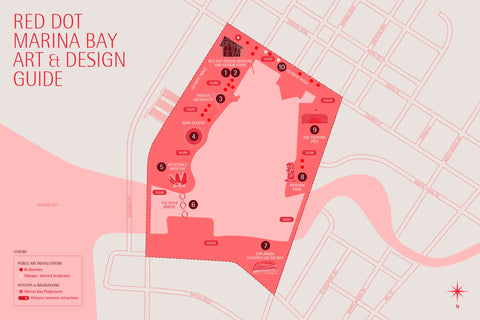
Map of Red Dot Marina Bay with art and design guide showing mini icons of attractions around Marina bay

Attractions

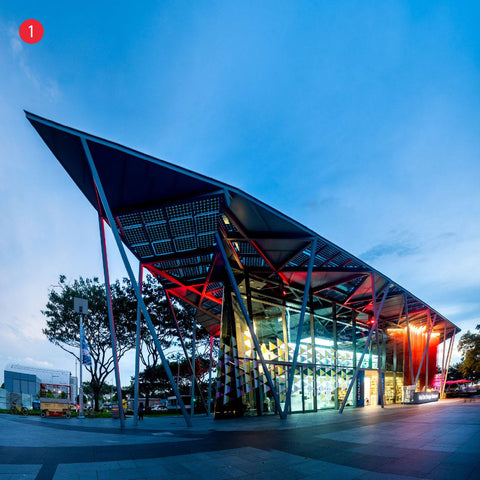
Evening time at Red Dot Design Museum building with glass panel and overhanging roof light up by red and white lighting at Marina bay

Red Dot Design Museum Singapore

Designed by Cox Architects, the full-glass building takes on a strong geometrical form, with a playful composition of structural steel elements and large overhanging roofs that reflect the dynamism of Marina Bay. It sits on reclaimed land that was once part of the sea. When Red Dot Design Museum took over in 2017, MAKK Architects refurbished the interior, adding a mezzanine to create two levels of exhibition and retail spaces. The building is home to Singapore's only dedicated design museum and the exclusive global home of the Red Dot Award: Design Concept, a natural starting point for a walk through one of the world's most deliberately designed precincts.

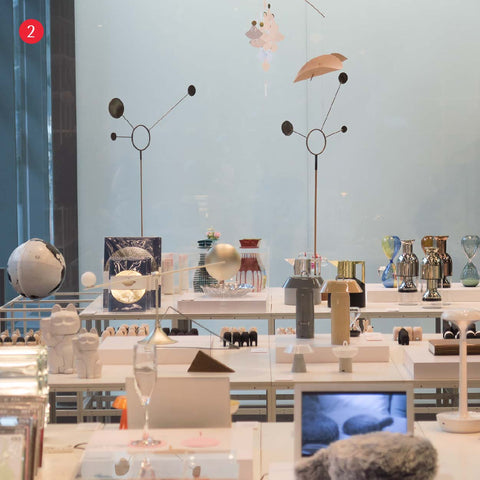
Design museum shop set up with white tops and colourful unique gifts and designer products on display

Red Dot Design Museum Shop

Most design museums have a gift shop. Few have one worth visiting in its own right. The Design Museum Shop carries well-designed objects from around the world, chosen for their beauty, function and design integrity. From products bearing the Red Dot Award quality seal to Singapore-designed objects and gifts with a story worth bringing home. The collection spans homeware, accessories, stationery and more, refreshed regularly so there is always something new to find. One of the more rewarding stops along the promenade for anyone looking to take something genuinely good home.

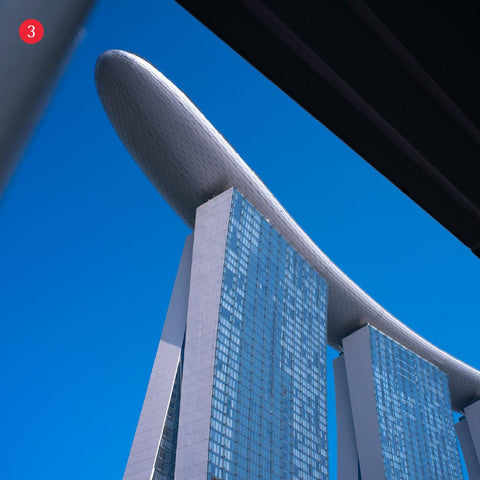
Part of Marina bay sands iconic building against a clear blue sky

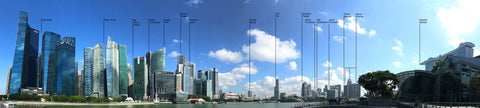
Panoramic view of buildings by Famous Architects

From this spot, the Marina Bay skyline unfolds as one of the most architect-rich in the world. The most prominent is Marina Bay Sands, designed by Israeli-Canadian architect Moshe Safdie — three towers tilted at 26 degrees, inspired by a deck of cards leaning against each other, connected by a 340-metre SkyPark that is the world's longest public cantilever. Look further along the skyline and you will find buildings by I.M. Pei, Norman Foster and Kanzo Tange, among others (several of them Pritzker Prize laureates). A full list of the architects and their buildings appears below.

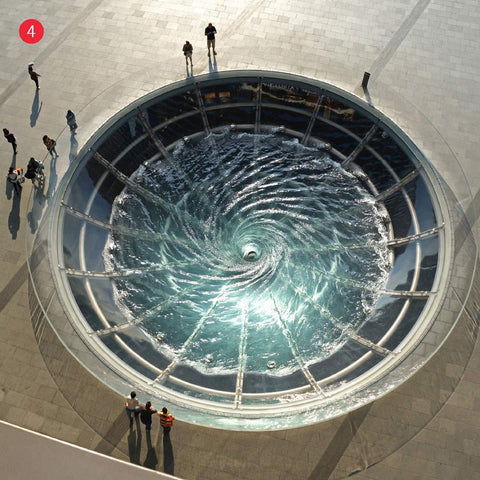
Visitors gathered around observing a large circular water feature with whirlpool installation at Marina bay

Rain Oculus @ Marina Bay Sands

Rain Oculus is an installation that channels collected rainwater in a spiral vortex while also functioning as a skylight. The artwork, a collaboration between Ned Kahn Studios and architect Moshe Safdie, is located at the open-air atrium of The Shoppes at Marina Bay Sands. The curved structure allows even a whisper to travel clearly across to the other side, creating an interactive sound experience for visitors. Go try it out!

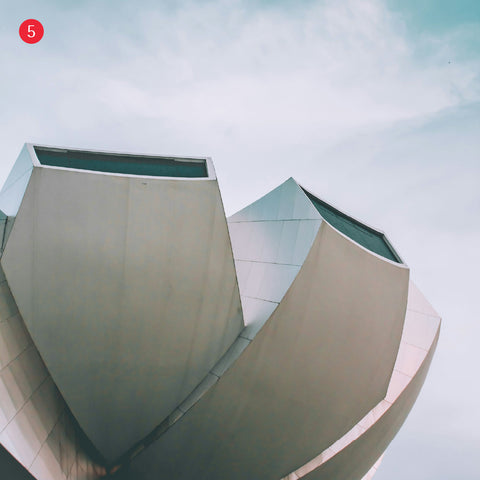
A partial view of Art science museum roof structure with geometric design against a cloudy sky

ArtScience Museum

Designed by renowned architect Moshe Safdie, the building is composed of two principal parts. The base is embedded in the earth and surrounded by the Bay’s water and a giant lily pond. The top is a flower-like structure made of 10 petals of varying radii that seemingly floats above the base. The permanent exhibition, Future World - where art meets science, is created in collaboration with teamLab, a renowned Japanese interdisciplinary art collective. It also hosts touring exhibitions curated by other museums.

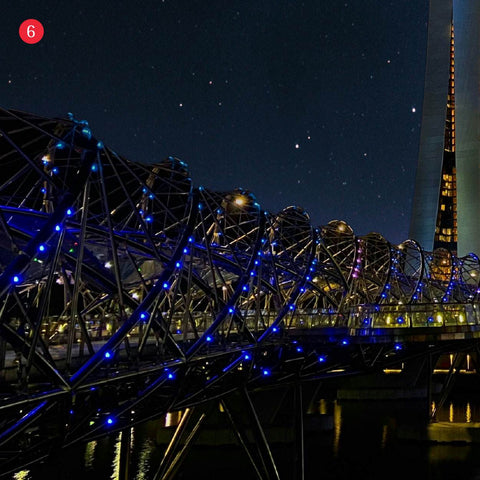
Iconic helix bridge with spiralling blue lighting surrounding a walkway above Marina bay under a starry night sky

The Helix Bridge

The Helix Bridge takes its form from the double helix DNA structure, symbolising life and continuity, renewal and growth. Designed by Philip Cox, Arup and Singapore's Architects 61, this 280-metre steel structure links the two sides of Marina Bay and forms part of the necklace of attractions encircling the waterfront. At night, lighting accentuates the double helix form, making the structure as striking after dark as it is by day.

Sharp, durian-shaped thorns forming a geometric roof pattern on the Esplanade building against a clear sky

Esplanade - Theatres on the Bay

Esplanade was named due to its significant presence in the Esplanade Park where many of Singapore's historical landmarks are located. The building is designed by local design firm DP Architects in collaboration with UK studio Michael Wilford and Partners. Affectionately known by locals as the "durian" for its distinctive spiked exterior, the building consists of two rounded space frames fitted with triangulated glass elements and aluminium sunshades, which balance outward views with solar shading, a design solution that is as functional as it is iconic.

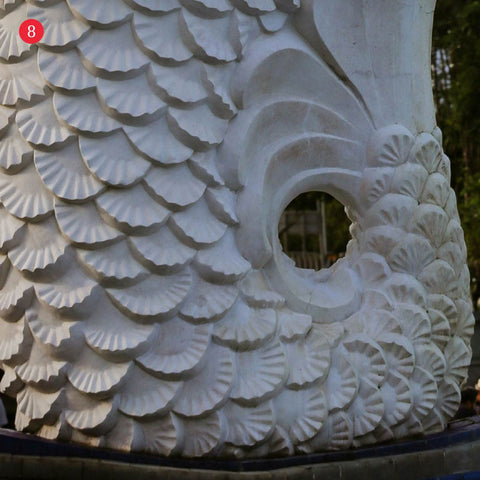
Close-up view of the Merlion’s fin-textured white stone sculpture along Marina Bay

Merlion Park

The Merlion began not as a sculpture but as a logo, created in 1964 by British zoologist Alec Fraser-Brunner as the identity mark for the Singapore Tourism Board. It was brought to life as a public sculpture by pioneering local sculptor Lim Nang Seng, who also designed Singapore's first one-cent coin. All eight of his children participated in the making of the 70-tonne concrete statue, crafting details including the eyes, which are made from red teacups. The 8.6-metre statue was relocated from the mouth of the Singapore River to its present location in 2002.

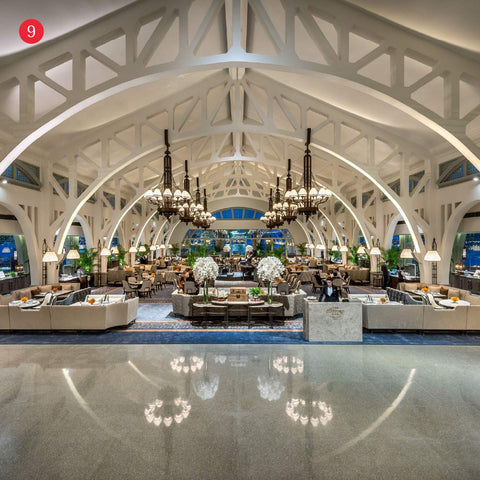
Interior of Clifford Pier, an open indoor space with high-arched ceilings, chandeliers, polished floors, showcasing heritage architecture and elegant furnishings

The Clifford Pier

Originally constructed in 1933 and designed by Frank Dorrington Ward, then chief architect of the Public Works Department, the Clifford Pier is one of Singapore's finest examples of Art Deco architecture. Its most distinctive feature is the concrete arched trusses in a ribbon form that span the roof, creating an unobstructed space across the expansive pier deck. Granted conservation status by the URA in 2007 and restored by DP Architects, it now houses a restaurant. Locals have long called it "red lamp harbour," after the red beacons once shone over the pier as warnings to ships.

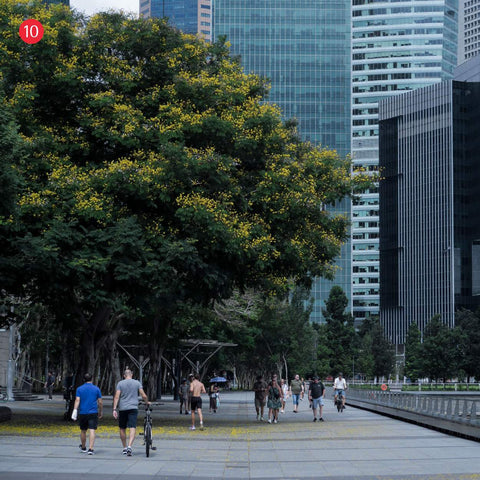
People walking and cycling along the Marina Bay waterfront promenade, with colourful trees and skyscrapers in the background

Olympic Walk

A scenic boardwalk promenade offering views of Marina Bay’s skyline and tranquil waters, the walkway is part of the legacy from Singapore hosting the Youth Olympic Games in 2010. 205 trees were planted in honour of each of the 205 National Olympic Committees that participated in the 2010 Singapore Youth Olympic Games. The installations were among the first public art pieces introduced to Marina Bay, commissioned to enrich the visual identity of the waterfront promenade.

Public Art Installations and Pitstops

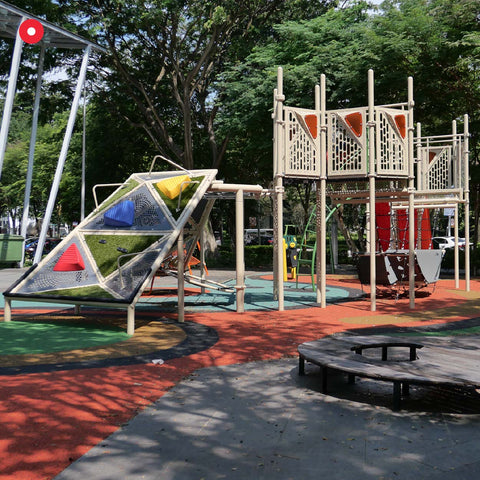
Playground next to Red dot design museum with unique design blends physical challenge and sensory play

Marina Bay Playground

A rare outdoor playground in the heart of the city, the Marina Bay Playground sits directly in front of Red Dot Design Museum. Refreshed in May 2026 with a PlayHill set by playground equipment manufacturer Playworld, the design blends physical challenge with sensory play: two elevated climbing hills, sensory drums, an auditory sphere and the Mighty Descent, a wide slide designed for multiple riders at once. A considered piece of play design in one of Singapore's most architecturally deliberate precincts.

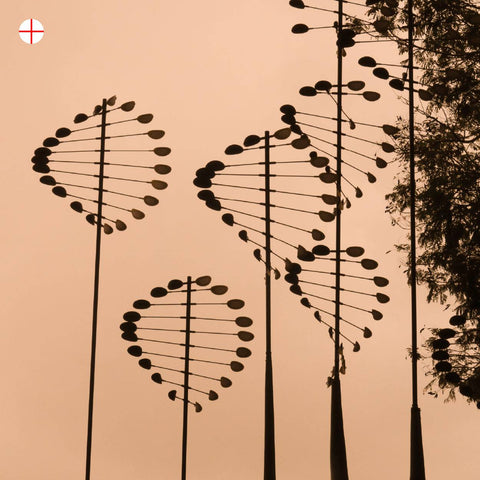
Decorative metal sculptures resembling DNA helixes at Marina bay against an evening sky background

Olympic-themed Installation: Breathe

Commissioned as a permanent public artwork for the 2010 Youth Olympic Games, Breathe draws on the analogy of an athlete's breath as the source of endurance. Its slender windmill-like forms reference the bronchioles of the human lung, while the overall structure echoes the branching pattern of trees. The 192 cups incorporated into the design are shaped after olive leaves, a symbol of peace in the Olympic tradition.

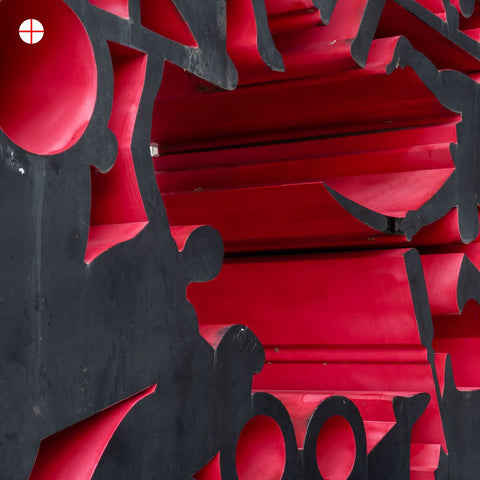
Close-up of red and black Olympic theme structure along Marina bay

Olympic-themed Installation: A World United

“A World United” illustrates the unifying spirit of sport through a stylised and dynamic depiction of sportsmen engaging in the 26 sports of the Youth Olympic Games. Symbolising peace and mutual respect of cultures shared by individuals through sport, the circular shape of the work is also a reflection of the esprit de corps, the shared sense of pride, loyalty and belonging that binds a team together, as well as the Olympic ideals of friendship and mutual respect across cultures.

Re:Benches

Benches created using seating planks from the former National Stadium of Singapore have been installed at various locations, of which 17 can be found at the Waterfront Promenade. Re:Bench was created by designers, artists and architects as part of a design competition launched in 2012. Every plank carries the memory of the former National Stadium, and the bench designs ensure those memories are not just preserved but actively continued by the people who use them today.

Illustrations of a bench collection around Marina Bay, each labeled with its name and designer

Panoramic view of buildings by Famous Architects

The buildings visible from the promenade were designed by some of the world's most celebrated architects, many of them Pritzker Prize laureates — architecture's highest honour.

Listed in the order of appearance:

  • Paul Katz, Marina Bay Financial Centre
  • Peter Pran, The Sail @ Marina Bay
  • Ng Keng Siang, Ascott Raffles Place
  • Kisho Kurokawa, Republic Plaza
  • Cesar Peili, Ocean Financial Centre
  • Kanzo Tange, One Raffles Place, 1987 Pritzker Prize Laureate
  • Helmut Jahn, Chevron House
  • Alfred Wong, Peninsula Plaza
  • I.M. Pei, Raffles City, 1983 Pritzker Prize Laureate
  • Norman Foster, South Beach Tower, 1983 Pritzker Prize Laureate
  • John Portman, Marina Mandarin, Mandarin Oriental
  • Ole Scheeren, Duo Tower 
  • Thom Maine, Centennial Tower, 1983 Pritzker Prize Laureate
  • Kevin Roche, Millenia Tower, Ritz-Carlton Hotel, 1983 Pritzker Prize Laureate
  • Moshe Sadie, Marina Bay Sands
Panoramic cityscape of Marina Bay featuring prominent skyscrapers, each labeled with its architect’s name

The walk ends where it begins, at Red Dot Design Museum Singapore, a natural base for exploring one of Singapore's iconic waterfronts. If you have time to extend your day, Gardens by the Bay sits a short walk further along the waterfront, where the Supertrees by Grant Associates and the conservatories by Wilkinson Eyre Architects make it one of the most ambitious examples of landscape and architectural design in the region. Marina Bay is often visited but the design and architecture stories behind its landmarks are easy to walk past. This guide is an alternative way to explore Marina Bay and see it through a different lens.